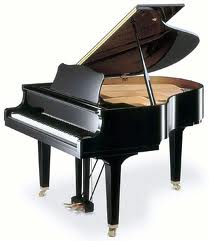
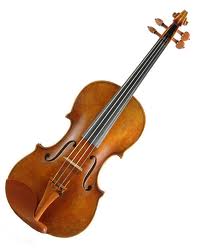
In the early church, music was monophonic and unaccompanied. Church leaders did not want the emphasis to be on the singers or musicians lest a false sense of spirituality arise from listening to music in the church. As a result, instrumental music was not allowed in the church for almost a thousand years after the fall of Rome. During the Protestant Reformation, instrumental music was again outlawed in the church. John Calvin (1509-1564) said concerning instrumental music in worship, “Musical instruments in celebrating the praises of God would be no more suitable than the burning of incense, the lighting of lamps and the restoration of other shadows of the Law. The Papists therefore have foolishly borrowed this as well as many other things from the Jews. Men who are fond of outright pomp may delight in the noise, but the simplicity which God commands to us by the apostles is far more pleasing to Him."
It was not until the Baroque Era that instrumental music became widely used in worship services of Catholics and Protestants alike. During the Baroque Era, many musical forms developed that are even still being used today, albeit with slight differences. Various forms that arose during the Baroque Period include the fugue, sonata form, theme and variations, rondo, recitative, aria, and passacaglia. Some of these forms had their origins prior to the Baroque Period, but were extensively developed and formulated in the Baroque Era.
 The music thus developed to be sung in the early Roman Catholic Church came to be called Plainchant, because of its inherent plain and monophonic sound, or Gregorian Chant, after Pope Gregory I (590-604), during whose reign the various plainchants were collected and organized. In about 1200 A.D, the motet arose as a musical form.
The word Motet comes from the Latin root “movere,” meaning, “To move.” A motet, unlike plainchant, would be polyphonic; having usually five or six parts, and was meant to be sung in a church setting. The madrigal was akin to the motet. However, madrigals were secular songs not meant for worship.
With the Baroque period arose a whole new set of musical forms. The fugue is very contrapuntal, with usually three or four separate “voices,” which, however, can all be played on the same instrument. The fugue is centered around a “subject,” the melody, which is usually very short, being only a few measures in length. After the entrance of the subject in the first voice, it is repeated in each of the other voices until it has passed through all voices. After several “episodes,” between each of which the subject is heard clearly by one or more voices, the fugue is brought to a conclusion.
Sonata Form as we know it today is arguably more of a Classical Period form than one of the Baroque; however, sonata form did exist in the Baroque Period, albeit very different than we know it today. “Sonata” in the early Baroque Period referred to a piece of music for solo instrument accompanied by basso continuo, with several movements, usually up to six, of contrasting speeds and moods. Later, sonata form was separated into two general categories: sonata de camera, the secular sonata, and sonata de chiesa, the church sonata. A major difference between the sonata de camera and sonata de chiesa is that the secular sonatas usually had dance movements, while the church sonatas did not.
Rondo form, or ritornello form, has its root in the Latin ritornare, meaning “to return,” and consists of a principal theme that is played over and over again in between alternating second and third themes. The typical pattern for rondo form in the Baroque Period is ABACABA. Theme and Variation form is a form based upon a simple theme. The theme is the melody, usually not too complicated, that appears at the start of the movement, and is followed by a series of variations, each a little different from, but each easily recognizable as containing, the theme.
Another musical form is the Recitative, which is used in operas to allow the singer to go through great volumes of speech very quickly. It also allows the singer to use regular speech for a time instead of singing. There are two types of recitatives: Secco and Accompagnato. A secco recitative was unaccompanied; however, basso continuo instruments can still be heard during a secco recitative. Accompagnato recitatives were accompanied by orchestra. These were not as common as Secco, or “dry,” recitatives. In contrast with the recitative, which is used to narrate the story, the aria was used to express the singer’s feelings and emotions, usually with many fewer words. Arias were usually accompanied by orchestra.
A Passacaglia is a courtly dance of slow to moderate speed, usually in ¾ time. Passacaglias consist of continuous variations on a slow-moving bass line. A Passacaglia is similar to a chaconne.